

Why filtration is a process engineering decision, not a commodity purchase The default procurement approach to filtration — specifying a micron rating, a flow rate, and a connection size, then selecting the lowest-cost compliant offer — produces equipment that is technically…
Quality Without Compromise: Why Certification, Documentation, and Traceability Define Supplier Value
Why documentation is not an administrative burden In oil and gas facilities, equipment failure is not just an operational inconvenience. It is a potential safety incident, an environmental liability, and an insurance and regulatory event. The documentation chain that accompanies a…
MENA Oil and Gas Equipment Market in 2025–2030: Investment Trends That Define Procurement Strategy
The investment cycle driving equipment demand MENA remains the world’s most active region for oil and gas capital investment. Saudi Aramco, ADNOC, QatarEnergy, and NIOC collectively account for a substantial share of global upstream and midstream capital expenditure. The combination of…
How EPC Contractors Can Reduce Procurement Risk on Oil and Gas Projects
Why equipment procurement is the highest-risk EPC phase In a typical oil and gas EPC project, bulk material and equipment procurement accounts for 40–60% of total installed cost. More significantly, equipment long-lead items — large compressors, custom pressure vessels, specialty valves,…
Instrumentation and Control Procurement in Oil and Gas: Why Your I&C Supplier Needs Engineering Depth
The technical complexity procurement routinely underestimates Unlike a pump or valve, instrumentation selection involves a matrix of interdependent technical parameters. For flow measurement alone, the choice between Coriolis, magnetic, vortex, ultrasonic, differential pressure, and turbine technologies depends on fluid properties, flow…
The Hidden Cost of Slow Procurement: Why Downtime Economics Must Drive Your Supplier Strategy
The arithmetic of downtime Consider a mid-scale oil production facility producing 15,000 barrels per day at a realised price of $75 per barrel. Daily revenue exposure is $1,125,000. An unplanned shutdown caused by a failed pump, a defective valve actuator, or…
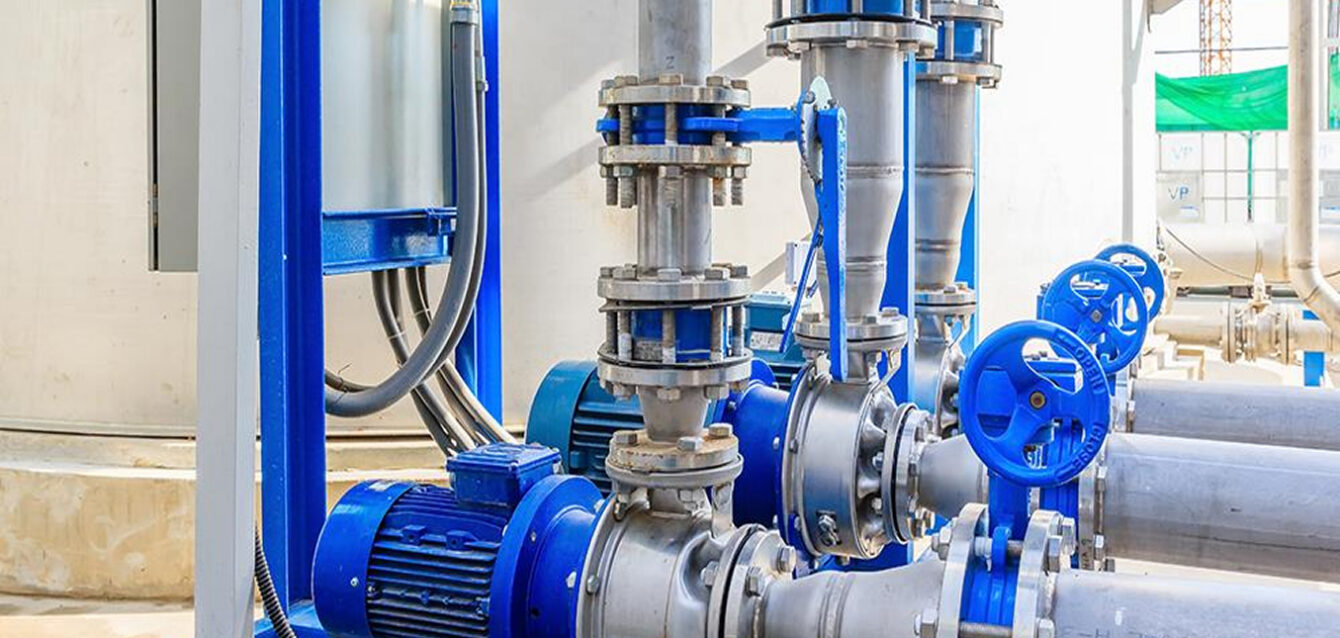
Pump Selection for Oil and Gas Applications: A Procurement Engineer’s Technical Guide
The specification variables that determine outcomes Correct pump selection begins with process data, not product catalogues. Fluid characteristics — density, viscosity, vapour pressure, solids content, corrosivity, and operating temperature — must be precisely known. Crude oil at 15°C and crude oil…

Cross-Border Industrial Procurement in a Reconfigured Trade Landscape
The structural challenge Western OEMs remain the dominant manufacturers of mission-critical oilfield equipment. Flowserve, Emerson, ABB, Siemens, Yokogawa, Endress+Hauser — these names appear in the design specifications of oil and gas facilities across Russia and the CIS regardless of current geopolitical…

Reverse Engineering in Oil and Gas: Keeping Ageing Assets Running When the OEM Cannot Help
What reverse engineering actually involves Reverse engineering for industrial spare parts is a precise technical discipline, not a shortcut. The process involves four rigorously sequenced stages: dimensional analysis using CMM equipment or 3D scanning to tolerances of ±0.01mm; spectroscopic material identification…

Why Dubai Is the New Hub for Oilfield Equipment Supply Chains
The geography advantage is real Dubai’s position between East and West is not a marketing cliche — it is a hard logistical fact. From Jebel Ali Port, one of the world’s ten busiest, equipment can reach Basra in under 48 hours…